







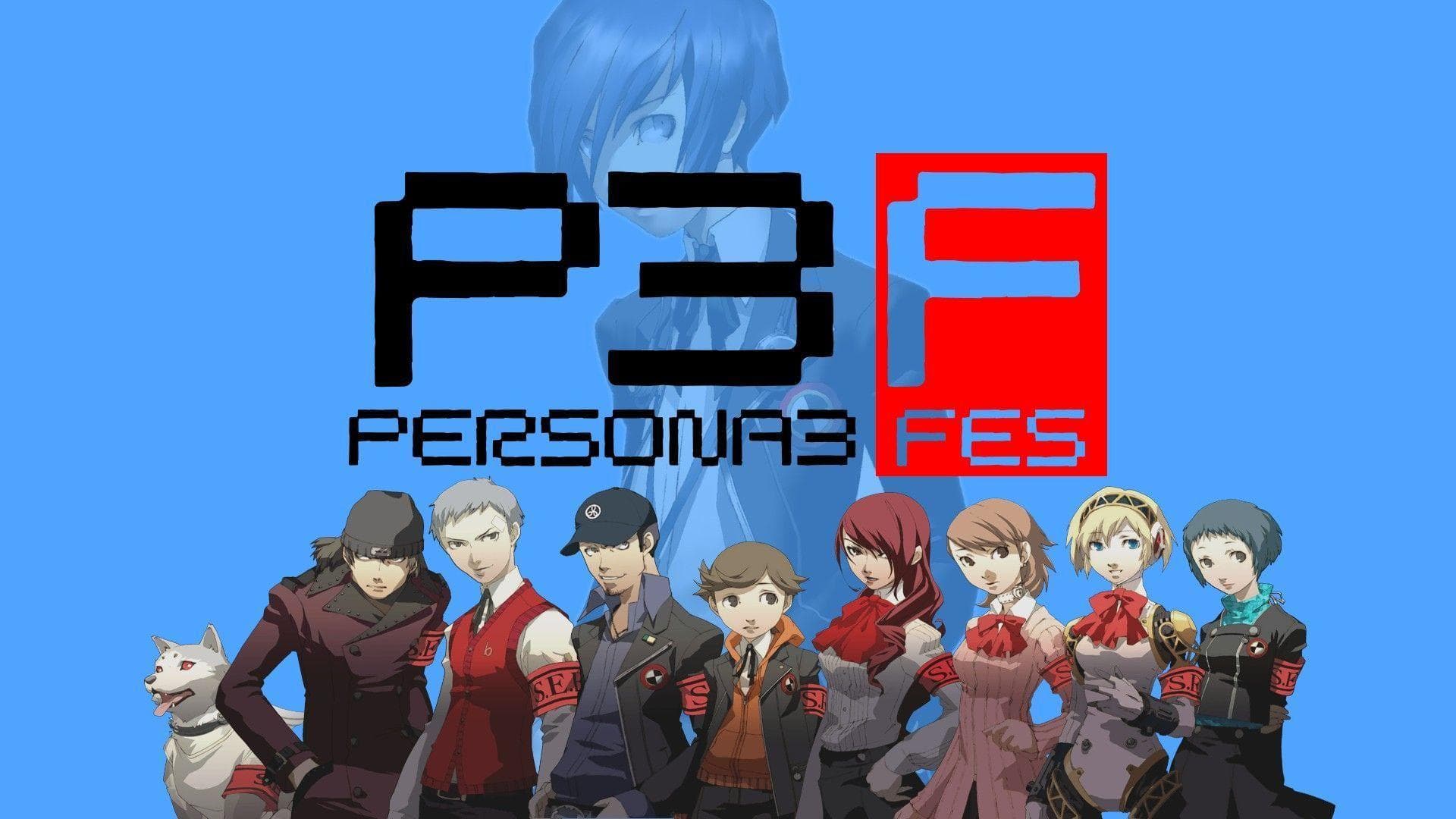
Original article: https://note.com/p3_mtaou03/n/nea9687a46636
Author: Persona 3 Archive / ペルソナ3アーカイブ
Translation: Me
Proofreading: Kei Koyama
Translator’s Preface
Out of curiosity about the backlash in Japan surrounding Persona 3’s epilogue at the time, I happened to come across this column. The contents may not be completely accurate or objective, so readers should treat this article simply as a piece of drama-archiving or “spectator gossip.”
Because both the work itself and parts of this article involve controversial topics, I also hope that discussion in the comments can avoid pure negative venting, and that people will discuss with at least a basic level of logic and courtesy.
If there are any translation errors, please point them out in the comments, and I will make corrections. If the original article contains any objective factual errors, please also supplement the information in the comments.
※ This column is based on testimonies from informed fans at the time, around 2006–2007, as well as the 2ch theory/discussion threads, or 考察スレ. It is absolutely not a column consisting only of the author’s personal subjective opinions.
Almost no records of the backlash against the epilogue remain online. Feeling a sense of urgency about the way some people who only knew The Answer through playthrough videos or spoilers were praising it as “necessary for P3,” the author created this archive on the occasion of Persona 3 Reload, a full remake, receiving the Episode Aigis remake DLC.
This column includes descriptions that may be unpleasant to fans who have cleared Episode Aigis and view it positively, but its purpose is not to deny their opinions.
Detailed scenario explanations are omitted here. Please refer to the author’s other column:
https://note.com/p3_mtaou03/n/n560c493caa35
Q&A for People Who Do Not Know How Badly The Answer Was Received or How Intense the Backlash Was
The author’s responses to praise from fans of The Answer and from people who only watched it through videos.
Q. Why was the FES epilogue, Episode Aigis / The Answer, criticized so heavily?
A. To put it simply, because they made a fan disc out of a scenario that felt full of blatant malice: “Did you think the protagonist would be revived by the power of bonds? Too bad. Wake up and face reality, nerds.”
In short, the scenario, gameplay, character writing, marketing, and creator interviews were all full of things to criticize. It was a problematic work that dragged down the reputations of the party members, especially Aigis. It is the kind of game that people who played it seriously often describe with the same reaction: “When I cleared it, I wanted to throw my controller.”
Q. Did the critics of The Answer simply fail to understand the theme of the story?
A. The scenario of The Answer itself is sloppy. More fundamentally, the problem is that it claimed to be a fan disc while throwing a painful story at the fans.
Incidentally, before FES was released, character designer Shigenori Soejima said in an interview that it would be “content that betrays fans’ expectations in a good way.”
Q. Were the critics of The Answer all people who believed Kitaro, the fan nickname for the protagonist, survived?
A. The Answer’s scenario and creator interviews were so overwhelming that even the “death camp” screamed in agony.
Male otaku who self-inserted into the protagonist, female otaku who were fans of Kitaro, and people who had happily analyzed the main story’s scenario were all equally burned to ash by The Answer. Logs from the time still remain, so please read them.
Q. Since this is an ATLUS work, isn’t it natural for there to be no salvation?
A. The problem is that Persona 3 is a school-life youth RPG where miracles are caused by the power of bonds, yet The Answer seems to mock the bonds and miracles of the main story.
It feels as though players carefully built a miniature world piece by piece, only for the sulking official creators to smash it to pieces. There is not much entertainment value either.
Q. Isn’t The Answer considered a black sheep or a piece of “dark history”?
A. It is a fact that the theory threads, or 考察スレ, burned so badly that they reached at least twenty threads, and that most fan sites from the time shut down.
There is also a 2024 version of a Togetter archive collecting the resentment of old fans, so please read that as well.
And since it was not included in P3P, it is only natural that fans treated it as dark history.
Q. I watched a playthrough and thought it was a good story.
A. Please talk about it after playing it yourself.
If you have not even played it, then be quiet.
This kind of comment from people who only watched playthroughs really does appear often.
Q. I played it after being spoiled and thought it was a good story.
A. Please properly consider how players who cleared it without spoilers felt.
Q. I played it without spoilers and thought it was a good story.
A. Please treasure that feeling.
And I would be happy if you could also treasure the feelings of people who thought The Answer was terrible.
1. Suspected False Advertising
First, as a basic premise: during the period between the release of the original Persona 3 and the release of FES, opinions on whether the protagonist lived or died were split into two camps, causing debate online.
※ In a Dengeki PlayStation interview after the release of the original game, producer Katsura Hashino said, “I leave the ending to each of you to interpret.” Later, in an interview included in the original game’s official setting materials, the protagonist’s death was almost confirmed. The author has confirmed the confusion in the theory threads at the time. The setting materials have been purchased and checked.
FES was announced while the debate remained unresolved. Its marketing made fans expect that the truth of the protagonist’s life or death would be revealed, that the protagonist might be revived, or that they would be able to see the protagonist again.
The title Persona 3 FES, with “FES” meaning “festival.”
The tagline: “As long as I do not let go, we will surely meet again.”
The teaser line printed in Dengeki PlayStation: “They will surely stand up again, for the sake of the ‘precious thing’ beyond the door on the far side.”
The marketing of FES as a fan disc dedicated to P3 fans.
A PV containing brand-new animation of the protagonist standing in the light.
Knowing all this, it is not hard to imagine that fans played Episode Aigis with hope.
The actual content was a scenario that betrayed fans’ expectations and predictions, and was difficult to call a fan disc. Not only did the fans’ debate fail to end, it became even more chaotic, eventually developing into attacks on the director and writer.
In the PV, brand-new footage of the protagonist was used. It looked like a scene of the protagonist’s revival, but in reality it was merely a scene of Aigis remembering the protagonist.
The PV was structured with Heartful Cry as the background music, the party members splitting up in the colosseum, and ending with Fuuka’s line, “This is the final battle.”
It was an unsettling but interesting PV, one that seemed to suggest substantial content. In reality, many fans were deceived by it.
Some people say, “It was the players’ own fault for expecting too much,” but it is also a fact that this was an extremely questionable marketing method.
In addition, before the release of FES, Soejima made the following comment:
— Finally, please give a message to the players looking forward to FES.
Soejima: When Persona 3 was announced, it had a certain level of impact. I believe this will be a work that creates an impact of the same degree. FES is not positioned as a sequel, but the atmosphere is not exactly the same as Persona 3 either. It is a work that betrays fans’ expectations in a good way. Please wait for it with the same sense of surprise you felt when Persona 3 was released.
— Dengeki PlayStation, January 12, 2007 issue, Vol. 376, appendix DENGEKI Re:Play VOL.1 “Persona 3”
This was the first time I had ever seen a creator describe a game as “betraying expectations.” Perhaps there is a possibility that this was Soejima’s warning.
2. A Scenario Full of Holes
Characters Who Are Impossible to Empathize With
The player controls Aigis with the hope of exploring the truth behind the protagonist’s death, wanting to meet him again and save him.
However, the key problem is that Aigis only worries about herself and remains indecisive from beginning to end, while none of the party members except Yukari want to save the protagonist.
Their opinions begin to split, the distance between them deepens, and eventually they part ways.
These cold characters, impossible to emotionally invest in, create stress for the player.
When the possibility appears that going back to the past might save the protagonist, Ken and Akihiko decide the protagonist’s will for him, while Junpei is afraid of Nyx.
In this way, the party members avoid saving the protagonist using excuses that make no sense at all.
This is because they have become puppets of the creators. Their words and actions make it feel as if the bonds built up in the main story have been completely wasted, which enraged players.
In the scene where the party splits up, each character’s thoughts are as follows:
Junpei: He does not want to go back to the past because he remembers the fear of fighting Nyx again. In the scene where the party splits, he tries to take the key that has become the source of conflict.
Koromaru: Because Aigis has lost her dog-language translation function, his thoughts cannot be confirmed. He follows Junpei.
Akihiko: No matter what happened, the past cannot be changed. Going back to the past would mean losing the fight against himself.
Ken: Because the protagonist saved them, he wants to respect the protagonist’s will and move forward. Going back to the past to save the protagonist would mean insulting his resolve.
Yukari: She wants to see the protagonist again and go back to the past to save him.
Mitsuru: She does not make any particular claim regarding the protagonist. Because she owes Yukari a debt, she follows Yukari.
Aigis: She feels that both going back to the past and moving forward have problems, and cannot make a decision.
Metis: No matter what, she will protect Aigis.
Fuuka: She does not make any particular claim regarding the protagonist. She goes with the flow and follows Aigis in a support role.
If you find yourself thinking, “Why is this character saying something so strange?” it is because the creators turned them into controllable puppets, so you must not think too deeply about it.
As you can see, the only person who wants to save the protagonist is Yukari. It looks as if the factions split cleanly, resulting in a format where everyone uses the Yukari Persuasion Method — though in practice, it feels more like deciding things through violence. To be honest, it is disgusting.
By the way, an opinion has appeared online claiming that “Junpei grew in The Answer,” but the truth is that players cannot feel his friendship with the protagonist at all. He remains opportunistic from start to finish. Far from standing in the position of calmly thinking things through, he looks as if he is impatient to participate in the battle where the party splits apart. Rather than character growth, it is fair to say that he suffers character assassination and becomes the biggest victim of Episode Aigis’s scenario.
There is another column discussing Junpei in The Answer:
https://note.com/p3_mtaou03/n/nae8aa227672c
Aigis Is Protected, While the Other Party Members Are Tarnished
Aigis is constantly protected and affirmed by her younger sister, Metis.
While the party members are arguing over the protagonist, Metis strongly objects: “You should worry about my sister too! My sister has the same power as the protagonist, so she might die too!”
The development, which cares more about the wavering Aigis than the will of the protagonist who sacrificed himself in battle, does not match the player’s feelings.
It feels as if the story is telling players that they should take better care of the weak-willed Aigis than of the protagonist who sacrificed himself in battle. This does not create emotional resonance.
In the colosseum battle where the party members’ opinions split, the story will not progress unless the player character, Aigis, wins. Therefore, Aigis’s victory and decision are treated as the correct answer.
However, the player cannot participate in Aigis’s decision. They can only watch the story progress as a bystander.
There is also a scene where Yukari shows hostility toward Aigis, attacks her, and is then lectured by Metis and the others.
The player empathizes with Yukari, who wants to save the protagonist, and ends up split from the creators’ intent along with Yukari.
Aigis remains pure and protected by Metis. Yukari, who opposes Aigis, causes conflict, becomes a dirty loser, continues to make a fuss even after losing, and is turned into a clown.
This sequence of events is vivid, unpleasant, and completely lacking in catharsis. For players who empathized with Yukari, it is a nightmare.
Grotesque Imagery
After defeating the protagonist’s shadow, an extremely shocking animated scene is shown.
The scene depicts, in a realistic 3DCG art style, something shaped like the protagonist having its skin and muscles broken down, its internal organs exposed, and its body dismantled. The image is completely different from the way Shadows had been depicted up to that point, and it shocked players.
The party members who witness this scene barely react. For some reason, this is also the only animation that cannot be skipped. Without a doubt, it exists to provoke disgust in players.
The author speculates that perhaps this scene was added after voice recording had already been completed, which might explain why the party members do not react. But the truth is unknown.
An Ending That Feels as Though It Is Mocking the Player
Reposted from a previous column:
Since they went out of their way to release an epilogue, surely it will become a meaningful story about the debate over whether the protagonist lived or died, right?
→ Five minutes after the start, the protagonist has already been cremated.
Aigis awakened to the Wild Card power, so surely she will do something, right?
→ From beginning to end, she only thinks about herself.
If we climb the tower and chase the protagonist’s shadow, will the protagonist be revived?
→ After being forced to fight the shadow, we are shown a grotesque disassembly show of the protagonist. The party members do not react.
A key that can suddenly return to the past appears! Of course everyone will go save the protagonist, right?
→ For some reason, opinions begin to split, and the party members start killing each other over the key.
After Aigis gathers all the keys, surely the party will go save the protagonist, right?
→ They do not change their minds. Aigis only goes to January 31 to confirm what happened. Yukari, the only one who wants to save the protagonist, is appeased and bows her head to Aigis.
A final boss called Erebus suddenly appears! If we defeat this thing, surely the protagonist will be revived, right?
→ Because it is humanity’s malice, it cannot be defeated.
Aigis found the answer to life! She burned out her circuits and stopped moving — did she save the protagonist by sacrificing her own life for everyone!?
→ Aigis becomes human and is revived. The Universe? She only used it for herself.
If nothing else, after the ending plays, surely there will be footage of the protagonist returning, right?
→ There is nothing like that.
Aigis’s Social Link was added, so maybe there is a hidden route…
→ It has nothing to do with that.
Even Chidori was revived, so the protagonist too…
→ He is not revived.
In this way, both the FES main story and The Answer contain a large number of elements that betray player expectations, including the previously mentioned misleading marketing.
Of course, there is a difference between betraying the audience’s predictions and betraying the audience’s expectations. It goes without saying that Episode Aigis caused backlash precisely because it was the latter.
Players had to endure painful grinding and boss fights, only to watch a story with not even the slightest hint of salvation. It is only natural that their love for the work turned into anger.
In interviews after the release of FES, the creators said that they had wanted to depict the protagonist’s death in the ending of the original game, and that they were shocked by the players’ debate.
As a result, fans felt that this was done to spite players who could not accept the creators’ intended outcome, and P3 turned into a burning field.
The creators brought it upon themselves.
Convenient Plot Developments, Stage Devices, and a Story That Favors Aigis
In Episode Aigis’s scenario, even though there is very little real progression, items that move the story forward appear immediately, and the party members conveniently keep quiet in accordance with the plot.
This is the kind of sloppy scenario progression and tool-like treatment of characters often seen in bad games.
The story developments are always this convenient.
Convenient settings appear one after another.
Characters in the work themselves point out the problems.
A reason to fight is forced onto Aigis, who cannot decide her own will, and all explanations are handled by Metis.
The playable character Aigis is always indecisive. Fuuka is always a dull guide for every situation. Metis is Aigis’s shield and exposition device. The party members are selfless puppets manipulated by the creators.
The player’s feelings are always left behind.
The door to the protagonist’s room, which is never discussed in the story, exists only to make players expect that “maybe it will open at the end and we will see the protagonist.”
The same lines are repeated with every boss.
Fuuka’s investigation scenes have no meaning in the scenario.
And Yukari, who had been crying and saying she missed the protagonist, suddenly becomes quiet in front of the protagonist who has become the Door of the Seal, and begins praising Aigis.
This was the moment that dealt a fatal blow to Yukari-side players.
When it is revealed that Metis’s true identity is Aigis herself, players who look back on Metis’s words and actions as an Aigis-affirmation bot up to that point are left speechless.
Even after learning that the protagonist can never pass on forever, there are lines like: “I really am a happy person,” and “Although I was sweating cold until the very end, reaching this result is truly something to be happy about.”
This Aigis-praising development, which can only be called a nightmare, drove players who kept playing with hope until the very end into despair.
3. Painful Battles and Exploration
Unlike the main game, Episode Aigis forces the difficulty to HARD.
Clearing The Answer takes roughly thirty hours. More than twenty hours are spent on battles and exploration like this, and I hope people who only watched videos will keep in mind that players at the time had to clear it completely blind, without guides.
The Persona Compendium Cannot Be Used
Because the compendium cannot be used, players must collect Personas during Shuffle Time. Since there are no Social Link fusion bonuses, raising Personas takes time. Persona fusion, of course, uses the old “tic-tac-toe” style system.
Direct Commands Cannot Be Given to Party Members, and the Party AI Is Even Worse Than in the Main Story
The AI is idiotic enough to use Medicine when other party members are near death. Even when better items are available, they insist on using Medicine.
In the first place, recovery and support commands are grouped together, so there are many situations where you want them to use a support skill, but they use Medicine instead.
Because the party members are completely useless, if Aigis is knocked down or afflicted with a status condition, even random encounters can kill you.
The One More System Is Different From P3P and P3R
The PS2 version of Persona 3’s battle system includes unfriendly mechanics such as:
“Attacking a downed enemy immediately makes it stand up.”
“If you use an all-target attack against multiple enemies, you do not get One More unless every enemy is knocked down.”
“It takes one turn for a character to stand up after being knocked down.”
Because of this, if you do not give your party members the order to knock down enemies, they may use an all-target attack even when some enemies are already down, causing those enemies to stand back up. It is extremely troublesome.
Because there is no baton pass system, mid-boss battles take a very long time.
Many Mid-Bosses Have Evade Skills
Mid-bosses often have setups like: weak to electricity, nullifies ice, and has Evade Wind. These compositions are extremely unpleasant, and when combined with the party’s idiotic AI, they become even more difficult.
In short, the moment a weakness is analyzed, the party members start erasing their own advantage with resisted attacks. For example, if you bring Mitsuru as a healer against an enemy that has ice magic and nullifies ice, she will ignore healing and repeatedly cast ice spells that get nullified.
Incidentally, if you bring a party member whose element should counter the enemy, they may instead become a toy that repeatedly casts attacks into resistance. Analysis commands and party members with advantageous attributes can actually become traps that hold you back.
If you fight a boss seriously, one battle can take thirty to forty minutes. That is what the mid-boss battles of Episode Aigis are like.
Strengthened Party Members in the Colosseum
The useless AI they have as allies is heavily strengthened when they become enemies in the colosseum. They become monsters with no weaknesses, spamming Akasha Arts, Megidolaon, critical-rate reduction, and physical reflect shields.
If you could use all that, then take things seriously from the beginning.
Aigis’s Gun Is Hard to Hit With
The tower is narrow as usual, and the Shadows move even faster than in Tartarus. On top of that, Aigis’s gun has a subtle delay before firing, and its range is short, making it difficult to hit enemies.
Getting ambushed by enemies and having your party half-destroyed is an everyday occurrence in The Answer.
Because of systems like this, the entire work becomes a demon-like high-difficulty game.
The Answer’s exploration is basically HARD-mode Tartarus. Players like the author, who enjoyed the main story on NORMAL difficulty, were completely wiped out.
P3’s tower exploration already had a poor reputation in Tartarus, and Episode Aigis makes it an even more excessive ordeal by taking away the compendium.
On top of that, there is the scenario. It is not hard to imagine how much stress players experienced.
4. Developer Interviews
The comments from director Katsura Hashino and writer Yuichiro Tanaka enraged many players.
They are long, but they clearly show the gap between what players wanted and what the creators wanted to depict, so please read them yourself.
https://note.com/p3_mtaou03/n/n1ef37f9bfdef
Conclusion: The Problems With Episode Aigis
- The marketing deceived players.
- It was not the content players expected.
- The gameplay was terrible.
- Malice toward the player is scattered throughout, and there are too many overly explicit scenes. Even as a depressing game, its quality is poor. An entertainment product became nothing more than a stress generator.
- Character development follows the convenience of the plot and is poorly handled. Some characters become background noise.
- The protagonist is not saved. Even the slightest hope is crushed by a final boss that appears out of nowhere.
- The player cannot emotionally connect with the controllable character or the party members. The game becomes a self-indulgent work centered entirely around favoring Aigis.
- It is an anticlimactic scenario that completely wastes the emotional impact of the main story.
That is all.
There are probably many people who do not care about the criticism of The Answer, but it is also true that players who were strongly affected by the FES backlash gradually left the fandom.
Episode Aigis is in fact a scenario full of holes, and the gameplay also does not hold up. The responsibility lies with the developers, who failed to answer fans’ expectations for a fan disc.
There is no point attacking people who reject The Answer. And stirring up hatred against fujoshi or Kitaro fans is out of the question. Those people are not discussing the story; they are only attacking women and protagonist fans, so their arguments have no persuasive power. If you want to defend The Answer, at least use the minimum amount of logic.
Persona games after P4 mostly took happy-ending routes. FES hurt a large number of fans. Rather than bringing closure to the story, it caused even more debate, dragged the story all the way to P4U, and ultimately became a failed fan disc.
In addition to this column, the author has also created a column collecting blogs that reviewed reactions at the time. If you want to learn viewpoints other than the author’s, or understand FES in more detail, please go here:
https://note.com/p3_mtaou03/n/na9297123be5f
Finally, this column will end with selected creator comments that left the author speechless.
- “Therefore, as a recreation of the ending that every person will inevitably experience someday, we depicted a happy ending where life ends at its highest point of fulfillment.” — Tanaka
- “Aigis finding the everyday life she should return to is the best possible outcome.” — Tanaka
- “FES is content made for fans, so making everyone happy is the top priority. If it makes players think about their own way of living and creates something positive, that would make me happiest.” — Tanaka
- “At first, the ending was going to be a funeral. The Social Link characters would attend the funeral.” — Hashino
- “Your wife is there beside you, and dying like that would not be so bad.” — Hashino
- “Within the device of Persona 3, we tried to challenge death, the thing that can absolutely never be escaped. To put it clearly, it is bungee jumping.” — Tanaka
- “Although we wanted everyone to interpret it freely, we did not intend to make it hard to understand. For me, the reaction was a little surprising.” — Hashino
- “When I become an old man, dying in an environment like that would not be bad. Thank… you…” — Hashino
- “That is because I have never come close to death.” — Hashino
“It will not end with people thinking, ‘What the hell was that?’ and throwing their controllers.” — Hashino
“It will be content that betrays expectations in a good way.” — Soejima
KITA / 评论
Anki-tan reaction artwork by Shigeyuki, used under CC BY-SA 4.0.